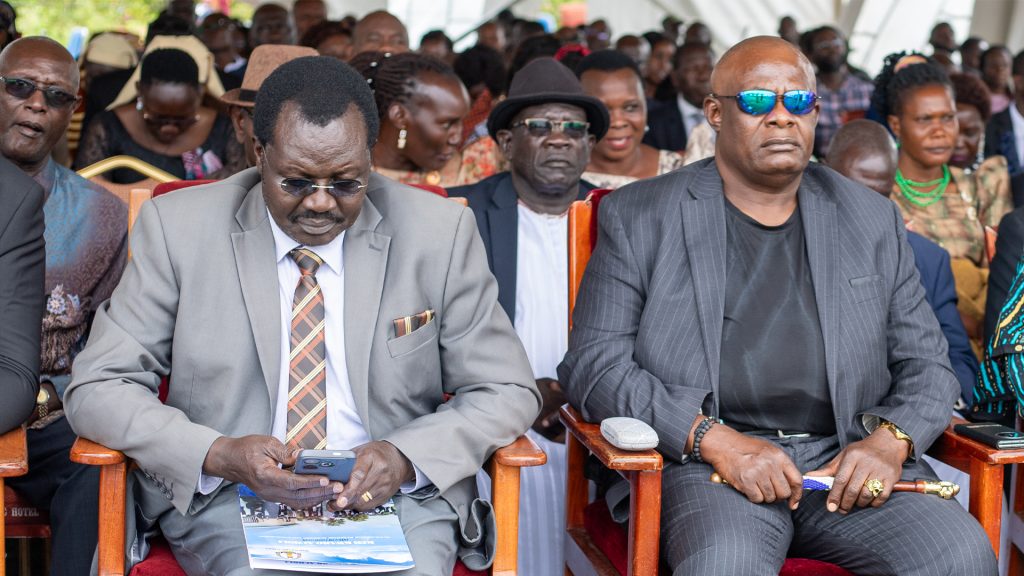
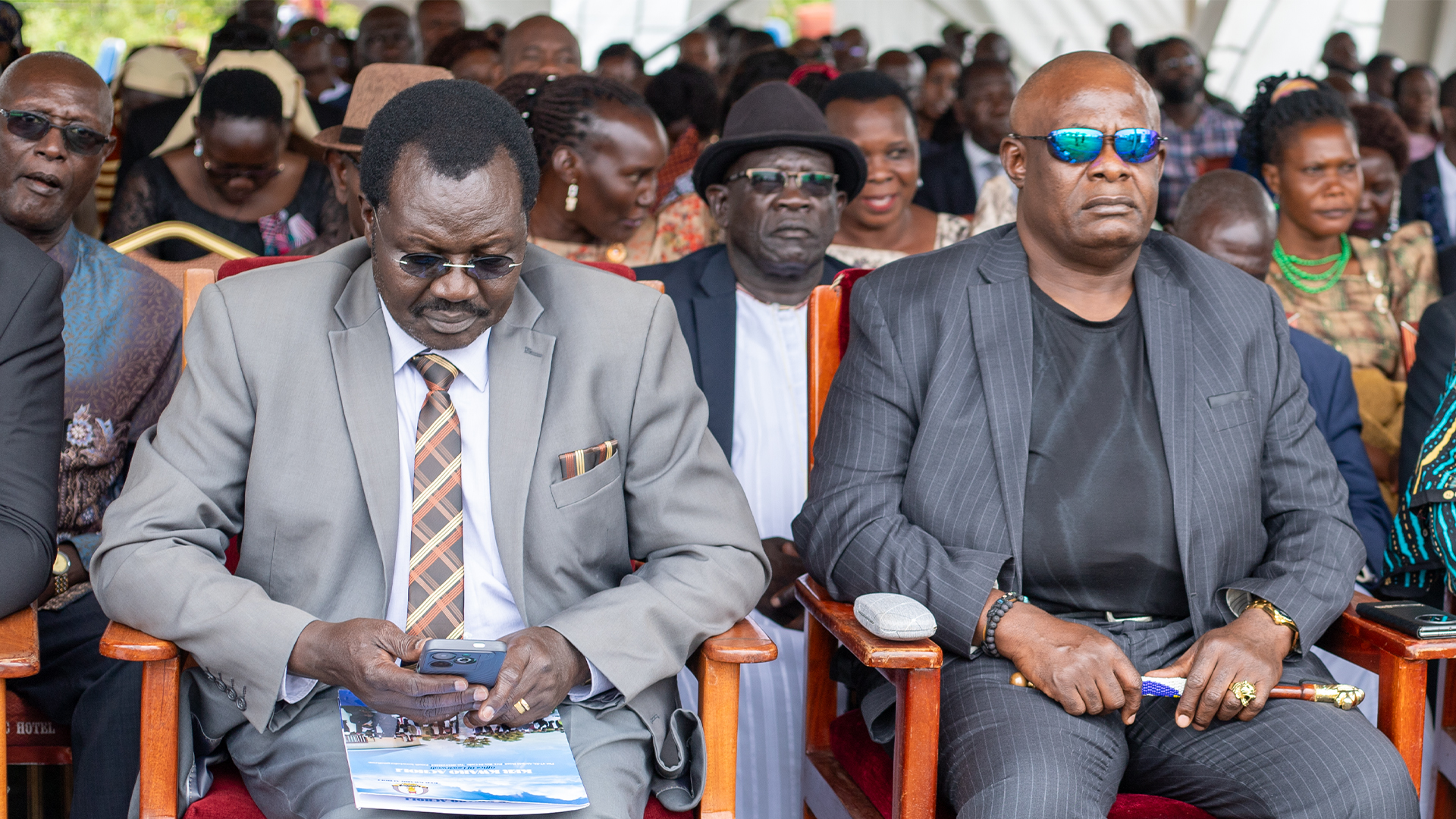
The air in the Kwar Adhora Kingdom was thick with a rare and beautiful energy—the kind that descends only when history pauses to take a bow. The occasion was not a coronation, nor a mere anniversary of a throne, but something far more intimate and extraordinary: a thanksgiving celebration for a living legend, the King of Kwar Adhora, who had clocked a century on this earth. One hundred years of breathing the African air, one hundred years of guiding his people, one hundred years of witnessing the tides of time wash over his beloved kingdom. The gardens were adorned in royal purple and gold, and the atmosphere was less of pomp and more of profound gratitude, as the nation gathered to say “thank you” to the Almighty for the gift of a king who had become an institution unto himself.
As the sun climbed higher, casting its blessing upon the thousands who had assembled, the crowd stirred with anticipation. Through the designated royal pathway, a motorcade of distinguished elegance made its way toward the pavilion. It was the Kamuswaga of Kooki, arriving not merely as a guest, but as a fellow sovereign paying homage to an elder. The moment his royal personage was spotted, a wave of ululations swept through the Kooki contingent present, their pride erupting in songs that spoke of the hills and valleys of their own kingdom. The Kamuswaga stepped out with the measured grace of a lion, his regalia catching the light, a living testament to the dignity of the Kooki throne.
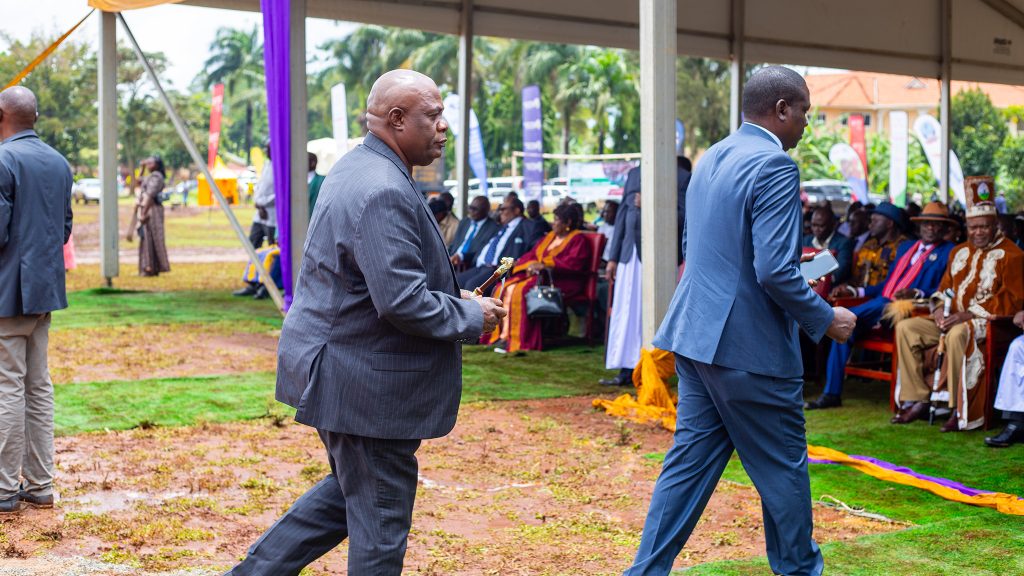
The Kamuswaga was not on this pilgrimage alone. By his side, executing his duties with the precision of a seasoned royal administrator, was the Owekitibwa Herbert Nsubuga, one of his two trusted Deputy Prime Ministers (Katwikiro) responsible for Kooki Kingdom Affairs. His presence was a clear message of the importance the Kooki kingdom attached to this historic centenary. Clad in the official attire of the palace cabinet, Owekitibwa Nsubuga moved with an air of calm authority, ensuring that the Kamuswaga’s royal fleet—the dedicated team of aides and security that accompanies the king—was seamlessly integrated into the elaborate protocols of the day.
The beauty of the event was further magnified by the presence of the central government, represented by Her Excellency the Vice President, Jessica Alupo. As the personal envoy of President Yoweri Kaguta Museveni, she brought with her the warmth and respect of the State. Her arrival was graceful, and she navigated the cultural protocols with the ease of one deeply rooted in tradition. The convergence of the national leadership with the array of cultural leaders created a picturesque tableau of unity, a moment captured by countless cameras—a symbol that Uganda walks together, hand in hand, with its traditional institutions.
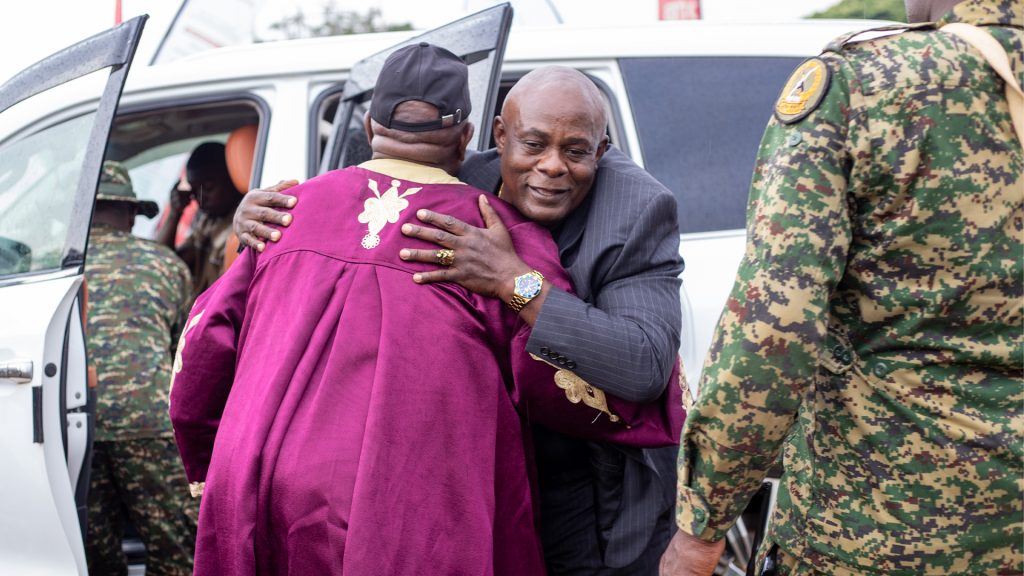
In a gesture that underscored the government’s reverence for the milestone, Vice President Alupo delivered a personal message from the President. Before the assembled royals and the rapt congregation, she announced a generous contribution of 50 million Ugandan shillings as a token of celebration for the centenarian king. The announcement was met with a thunderous ovation, a financial blessing that would undoubtedly support the continued legacy of a monarch who had seen a full century. It was a moment that bridged the generational gap, honoring the past while investing in the future.
But for the people of Kooki watching their king, the highlight remained his interaction with the celebrant. Seated among his fellow royals, the Kamuswaga was a picture of composed majesty. He watched the proceedings with keen interest, his eyes often resting on the centenarian king with a mixture of admiration and respect. Observers noted the quiet conversations he shared with neighboring cultural leaders, strengthening the cords of kinship that bind the region’s thrones. His royal fleet, under the watchful eye of Owekitibwa Nsubuga, ensured that every protocol was observed, a reflection of the disciplined and organized nature of the Kooki palace.
When the moment for royal greetings arrived, the Kamuswaga rose and approached the throne of Kwar Adhora with deliberate, reverent steps. Standing before the king who had seen a hundred harvests, a hundred rains, and a hundred years of his people’s joys and sorrows, the Kamuswaga spoke words that touched the hearts of all present. He extended the warmest congratulations from the people of Kooki, but more than that, he offered a prayer from the depths of his soul. He wished the venerable King of Kwar Adhora not only continued health but many more years of a blessed reign and, above all, unshakeable peace to blanket his beloved kingdom forever. The words hung in the air, a blessing from one king to another, rich with the weight of shared history and mutual respect.
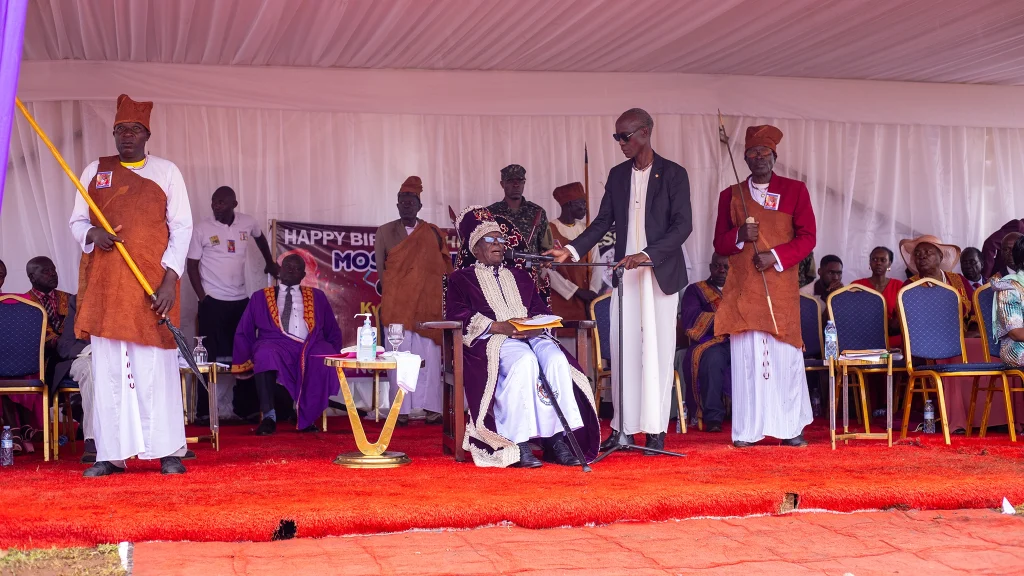
The thanksgiving atmosphere lent itself to moments of deep spirituality, as prayers from various faiths ascended for the centenarian monarch. The Kamuswaga participated with bowed head, a sovereign acknowledging the Supreme Sovereign. Cultural troupes performed dances that told the story of the last one hundred years, and the Kamuswaga watched with appreciation, occasionally sharing observations with the Owekitibwa Herbert Nsubuga about the beauty of the performances. It was a celebration of life, of heritage, and of the divine favor that had kept a king on his throne for a century.
The Vice President also took time to exchange pleasantries with the Kamuswaga, their conversation a reflection of the mutual respect between the government and the cultural institutions. Meanwhile, the Kooki subjects present beamed with pride, knowing their king was not just a spectator but a central figure in this historic gathering. The Owekitibwa Nsubuga ensured that the Kooki delegation was well cared for, a logistical efficiency that spoke volumes about the palace’s organizational capacity. It was a full-circle moment of leadership—from grand diplomatic gestures to the care for the common man.
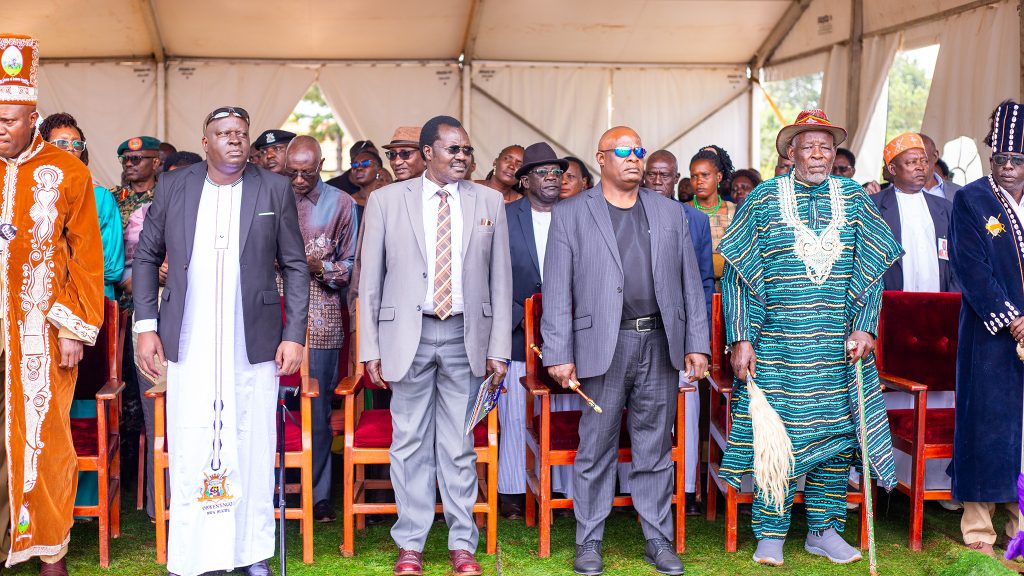
As the golden afternoon sun began its descent, casting long shadows across the thanksgiving grounds, the Kamuswaga prepared to take his leave. He departed as he had arrived—with the unmistakable aura of a king who understands the weight of his crown and the importance of honoring those who have walked the path before him. The people of Kooki swelled with pride, knowing their monarch had not only represented them but had done so with a grandeur befitting the occasion. In honoring the Kwar Adhora king’s century of life, the Kamuswaga of Kooki had once again proven that true royalty recognizes royalty—and that the bonds between Uganda’s ancient thrones remain unbreakable, forged in the fires of mutual respect and shared heritage.